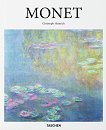
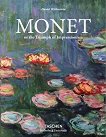
Hailed the "Prince of the Impressionists", Claude Monet (1840 - 1926) transformed expectations for the purpose of paint on canvas. Defying the precedent of centuries, Monet did not seek to render only reality, but the act of perception itself. Working "en plein air" with rapid, impetuous brush strokes, he interrogated the play of light on the hues, patterns, and contours and the way in which these visual impressions fall upon the eye. Monet's interest in this space "between the motif and the artist" encompassed too the ephemeral nature of each image we see. In his beloved water lily ... |
|
|
Master of the sublime: The essential Impressionist. ... No other artist, apart from J.M.W. Turner, tried as hard as Claude Monet (1840 - 1926) to capture light itself on canvas. Of all the Impressionists, it was the man Cezanne called "only an eye, but my God what an eye!" who stayed true to the principle of absolute fidelity to the visual sensation, painting directly from the object. It could be said that Monet reinvented the possibilities of color. Whether it was through his early interest in Japanese prints, his time as a conscript in the dazzling light of Algeria, or his personal acquaintance with the ... |
|
|
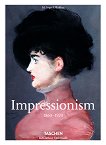
It was a dappled and daubed harbor scene that gave Impressionism its name. When Impression, Sunrise by Claude Monet was exhibited in April 1874, critics seized upon the work's title and its loose stylistic rendering of light and motion upon water to deride this new, impressionistic, tendency in art. As with many seminal art movements, the critics got their comeuppance. Today, Impressionism is close contender for the world's favorite period of painting. With blockbuster exhibitions, record-breaking auction prices, and packed museums, the works once dismissed as unfinished or imprecise are now beloved for their ... |
|
|
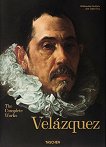
Manet called him "the greatest painter of all." Picasso was so inspired by his masterpiece "Las Meninas" that he painted 44 variations of it. Francis Bacon painted a study of his portrait of Pope Innocent X. Monet and Renoir, Corot and Courbet, Degas and Dalí... for so many champions of art history, the ultimate soundboard was - and remains - Diego Rodríguez de Silva y Velázquez (1599-1660). This updated catalog raisonné brings together Velázquez’s complete works, jaw-droppingly reproduced in extra-large format, with a selection of enlarged details and brand new photography of ... |
|
|
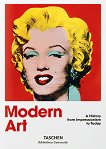
Over 200 paintings, sculptures, photographs, and conceptual pieces trace the story of modern art's innovation and adventure. With explanatory texts for each work, and essays introducing each of the major modern movements, this is an authoritative overview of the ideas and the artworks that shook up standards, assaulted the establishment, and trailblazed new ideas. A blow-by-blow account of groundbreaking modernism. Most art historians agree that the modern art adventure first developed in the 1860s in Paris. A circle of painters, whom we now know as Impressionists, began painting pictures with rapid, loose brushwork. ... |
|
Следват резултати с по-слабо съвпадение на търсеното: |
|
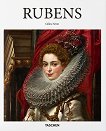
There are over 1,000 catalogued works by Sir Peter Paul Rubens (1577 - 1640), the 16th-century flag bearer for Baroque drama, movement, and sensuality. This essential introduction takes in the most important works from this astonishingly prolific oeuvre to explore Rubens’s influences and innovations, and his remarkable visual, and art historical, impact. The richly illustrated survey takes in Rubens’s portraits, landscapes, and historical paintings, as well as his famed and bountiful nudes. Along the way, we examine the artist’s astonishing technique and his deft ability to depict narrative in a compelling and legible ... |
|
|
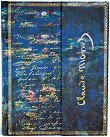
Тефтерът Monet от колекцията Embellished Manuscripts Collection на Paperblanks представя една от многото картини с водни лилии на френския художник импресионист Клод Моне. Уникалният дизайн с твърда корица ще потопи всеки в невероятния свят на изкуството. Съдържа 144 нелинирани страници от устойчива хартия, без съдържание на киселини. Тефтерът е подходящ за записване на задачи, идеи, напомняния и водене на всякакви бележки. Разполага с текстилна лента за отбелязване. От вътрешната страна, на задната корица на тефтера, има джоб, в който може да съхраняване важни бележки или малки по размер, но не и по значение спомени. ... |
|
|
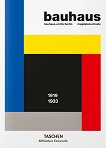
Updated Edition. ... This handy, updated edition explores the Bauhaus School of Art and Design through some 575 illustrations and biographies of its key personalities. Realized in collaboration with the Bauhaus-Archiv in Berlin, the reference work is now available in Bibliotheca Universalis format, the perfect companion for your next trip to Berlin, Weimar, or Dessau. In a fleeting 14-year period between two world wars, Germany’s Bauhaus school of art and design changed the face of modernity. With utopian ideas for the future, the school developed a pioneering fusion of fine art, craftsmanship, and technology, which ... |
|
|
Multilingual Edition (English, French, German). ... A tour of contemporary home decor around the world. With an inspirational richness and diversity of styles, these homes, residences, hideaways, and studios will astound and astonish, no matter the taste; be it rustic country cottage, New York-style loft, or bohemian bungalow. This survey of contemporary interior design carefully curates homes from all over the world - from Auckland, New Zealand, to Avignon, France. Mapped out through hundreds of images by renowned interior photographers, these gorgeous houses offer inspiration and ideas for your next renovation. Many ... |
|
|
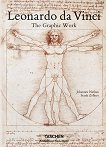
One of the most accomplished human beings who ever lived, Leonardo da Vinci remains the quintessential Renaissance genius. Creator of the world’s most famous paintings, this scientist, artist, philosopher, inventor, builder, and mechanic epitomized the great flowering of human consciousness that marks his era. "Leonardo da Vinci. The Graphic Work" features top-quality reproductions of 663 of Leonardo's drawings, more than half of which reside in the Royal Collection of Windsor Castle. From anatomical studies to architectural plans, from complex engineering designs to pudgy infant portraits, delve in and ... |
|
|
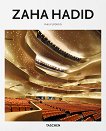
Zaha Hadid was a revolutionary architect, who for many years built almost nothing, despite winning critical acclaim. Some even said her audacious, futuristic designs were unbuildable. During the latter years of her life, Hadid's daring visions became a reality, bringing a unique new architectural language to cities and structures as varied as the Rosenthal Center for Contemporary Art in Cincinnati, hailed by The New York Times as the most important new building in America since the Cold War; the MAXXI Museum in Rome; the Guangzhou Opera House in China; and the London 2012 Olympics Aquatics Centre. At the time of her ... |
|
|
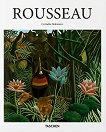
Henri Rousseau (1844 - 1910) was a clerk in the Paris customs service who dreamed of becoming a famous artist. At the age 49, he decided to give it a try. At first, Rousseau’s bright, bold paintings of jungles and exotic flora and fauna were dismissed as childish and simplistic, but his unique and tenacious style soon won acclaim. After 1886, he exhibited regularly at Paris’s prestigious Salon des Indépendants, and in 1908 he received a legendary banquet of honor, hosted by Picasso. Although best known for his tropical scenes, Rousseau, in fact, never left France, relying on books and magazines for inspiration, as ... |